
Start your technical designer career with strong pattern making skills.
From hand-drafted slopers to factory-ready tech packs and AI-powered virtual sampling. This pattern-making/technical design course gives you the exact technical skills, software fluency, and portfolio proof that hiring managers in fashion production are looking for.
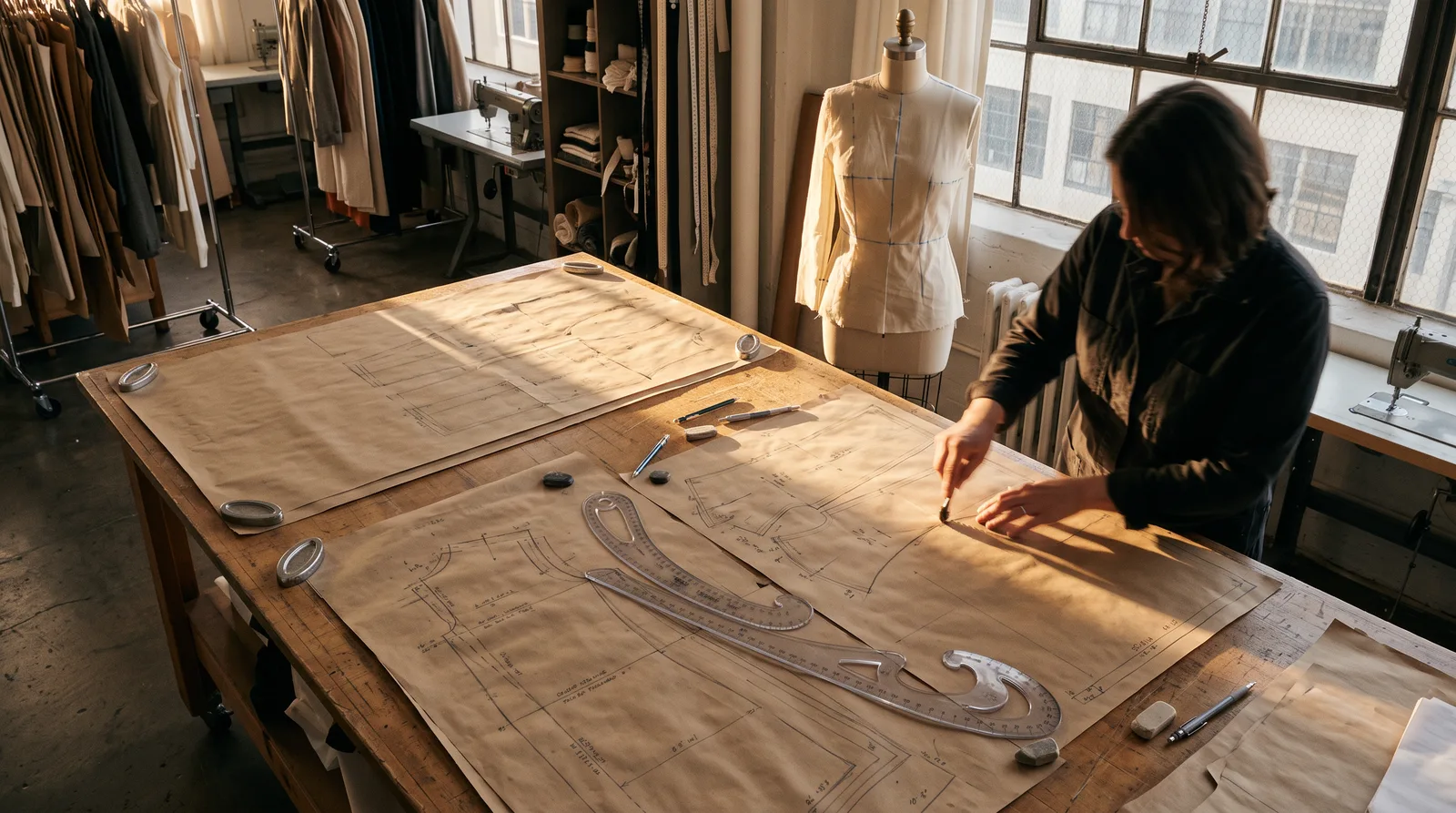
"Factories don't have time for vague and neither do I, so I'll teach you exactly what they need to see."
— Jennifer Xue, StyleCareer.com lead course developer
What you'll learn
What you'll be able to do
- Draft foundational pattern blocks — bodice, sleeve, skirt, and pants — using both flat pattern and draping methods
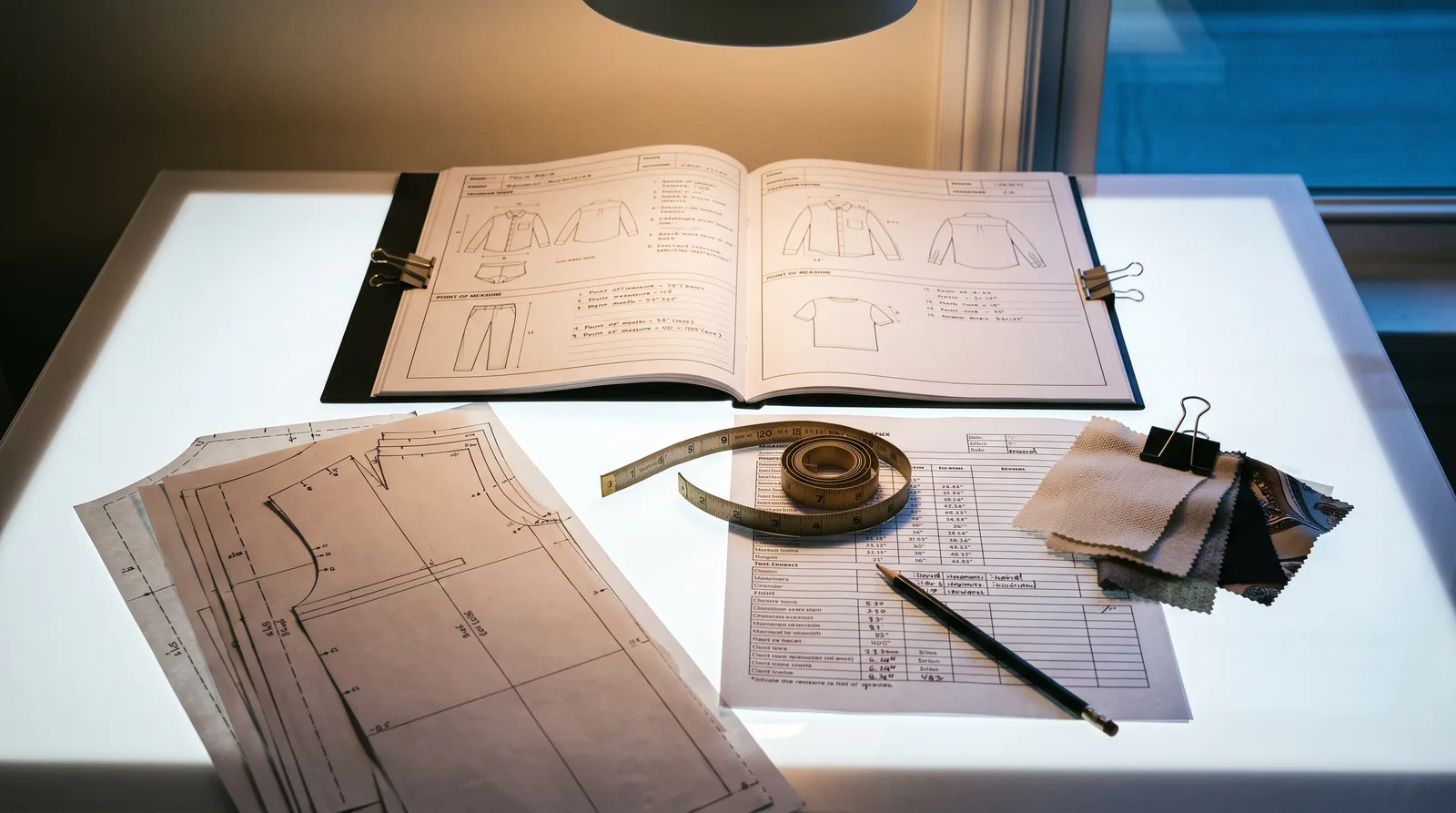
- Build complete, factory-ready tech packs including POM charts, construction specs, and tolerance standards
- Grade patterns accurately across a full size range by hand and using industry CAD software such as Gerber, Optitex, and CLO3D
- Diagnose and correct garment fit issues during live fit sessions and communicate changes clearly to design and production teams
- Use AI tools and virtual prototyping software to reduce physical sample waste and accelerate development timelines
- Build a professional technical design portfolio and navigate interviews, freelance entry points, and career pathways up to Head of Technical Design
How it works
A school that adapts to you
This isn't a set of static videos. Every lesson is generated live and tuned to where you actually are.
We learn your level
A quick placement check tailors your starting point so you're never bored or lost.
Lessons adapt as you go
Each lesson is written for your pace and your goal, adjusting as your skills grow.
Your AI coach keeps you moving
Checkpoints, feedback, and gentle nudges turn progress into a real result.
The curriculum
What's inside your school
12 modules · 48 lessons
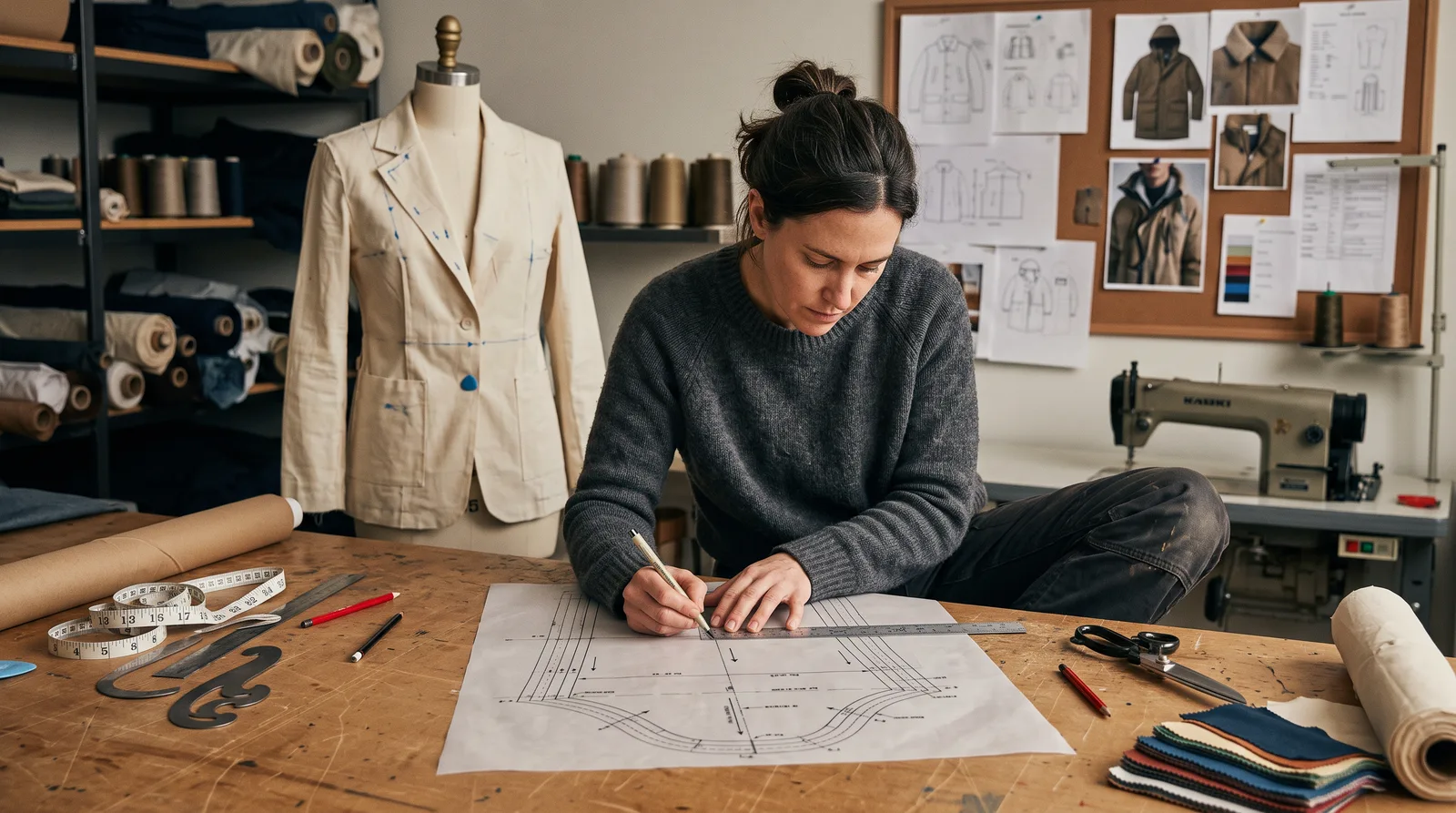
Myths & Realities of the Pattern Maker / Technical Designer Profession
Clears up common misconceptions and maps the real roles, responsibilities, and daily workflows in pattern making and technical design.
- 1.1What a Pattern Maker / Technical Designer Actually Does (vs. What People Think)Included
- 1.2Myth-Busting: "It's Just Tracing Shapes" and Other MisconceptionsIncluded
- 1.3Pattern Maker vs. Technical Designer vs. Fashion Designer — Clarifying the ConfusionIncluded
- 1.4A Day in the Life: Real Pattern Makers, Real WorkflowsIncluded
Foundations of Pattern Making
Builds the essential vocabulary, tools, measurement principles, and design-reading skills every pattern maker needs before drafting begins.
- 2.1The History and Evolution of Pattern Making as a CraftIncluded
- 2.2Tools of the Trade: Rulers, Curves, Muslin, and Digital EquivalentsIncluded
- 2.3Body Measurements, Ease, and Fit FundamentalsIncluded
- 2.4Reading a Design Sketch and Translating It to PatternIncluded
Flat Pattern Making Fundamentals
Develops hands-on skill in drafting foundational slopers and applying design details using classic flat pattern techniques.
- 3.1The Sloper/Block System: Bodice, Skirt, Sleeve, PantsIncluded
- 3.2Dart Manipulation and Seam PlacementIncluded
- 3.3Adding Design Details: Pleats, Gathers, Collars, PocketsIncluded
- 3.4Practical Exercise: Draft a Basic Bodice BlockIncluded
Draping & 3D Pattern Development (with AI Tools)
Covers draping on the dress form and bridges physical 3D development with AI-powered digital draping software.
- 4.1Draping on the Dress Form: Principles and TechniquesIncluded
- 4.2From Drape to Flat Pattern: Translating 3D to 2DIncluded
- 4.3AI-Assisted Pattern Development: CLO3D and Digital Draping ToolsIncluded
- 4.4Practical Exercise: Drape and Digitize a Simple GarmentIncluded
Grading & Size Specifications
Teaches accurate pattern grading across a full size range by hand and using industry CAD software.
- 5.1Grading Fundamentals: Scaling Patterns Across a Size RangeIncluded
- 5.2Size Charts and Fit Models: Industry StandardsIncluded
- 5.3Grade Rules and Grading by Hand vs. SoftwareIncluded
- 5.4Practical Exercise: Grade a Pattern Across Three SizesIncluded
Tech Packs & Spec Sheets
Builds the skill to create complete, factory-ready tech packs including construction specs, POM charts, and tolerance standards.
- 6.1Anatomy of a Tech Pack: What Factories Need to SeeIncluded
- 6.2Writing Clear Construction and Measurement SpecsIncluded
- 6.3Point of Measure (POM) Charts and Tolerance StandardsIncluded
- 6.4Practical Exercise: Build a Complete Tech PackIncluded
Fabric Behavior & Garment Construction
Explores how fabric properties drive pattern decisions, seam choices, and construction methods across fabric types.
- 7.1How Fabric Properties Affect Pattern and Fit (Woven vs. Knit)Included
- 7.2Seam Allowances, Finishes, and Construction MethodsIncluded
- 7.3Working with Specialty Fabrics: Stretch, Structured, DrapedIncluded
- 7.4Practical Exercise: Adjust a Pattern for a Different Fabric TypeIncluded
Fit Sessions & Garment Evaluation
Develops the skills to run productive fit sessions, diagnose fit problems, and communicate corrections to the full production team.
- 8.1Running a Fit Session: Roles, Process, and DocumentationIncluded
- 8.2Diagnosing Fit Issues and Making CorrectionsIncluded
- 8.3Communicating Fit Feedback to Design and Production TeamsIncluded
- 8.4Practical Exercise: Evaluate and Correct a Sample FitIncluded
Digital Pattern Making & Software Tools
Provides hands-on orientation to industry CAD platforms for digitizing, editing, and marker-making patterns.
- 9.1Overview of Industry Software: Gerber, Optitex, Lectra, CLO3DIncluded
- 9.2Digitizing Hand-Drafted PatternsIncluded
- 9.3Marker Making and Fabric Utilization BasicsIncluded
- 9.4Practical Exercise: Digitize a Pattern in a CAD ToolIncluded
AI & Technology Transforming Technical Design
Examines the AI-powered tools reshaping virtual sampling, grading, and prototyping — and addresses the ethical implications for the profession.
- 10.1The AI Technical Design Stack: Virtual Sampling and Fit SimulationIncluded
- 10.2Using AI for Grading Accuracy and Pattern OptimizationIncluded
- 10.3Reducing Sample Waste with Virtual PrototypingIncluded
- 10.4Ethical Considerations: Job Shifts, Skill Dependency, and Quality ControlIncluded
Building Your Portfolio & Personal Brand
Guides students in assembling a compelling technical portfolio and presenting their skills to employers and clients.
- 11.1What a Technical Design Portfolio Should IncludeIncluded
- 11.2Documenting Process: Flats, Specs, and Fit PhotosIncluded
- 11.3Presenting Technical Skill to Non-Technical Hiring ManagersIncluded
- 11.4Practical Exercise: Assemble Your Technical Design PortfolioIncluded
Breaking Into the Industry & Career Growth
Maps the real entry points, interview strategies, and career pathways from first role to Head of Technical Design.
- 12.1Entry Points: Pattern Making Assistant, Sample Room, FreelanceIncluded
- 12.2Acing the Technical Design Interview (Skills Tests & Portfolio Review)Included
- 12.3Networking Within Production and Manufacturing CirclesIncluded
- 12.4Career Pathways: From Pattern Maker to Head of Technical DesignIncluded
Who it's for
Is this you?

Fashion graduates
They have design training but want the technical production skills that actually get them hired on a product development or technical design team.

Skilled sewists going pro
They can construct a garment beautifully but need the industry-standard language — tech packs, grading, POM charts — to cross from hobbyist into professional.

Design assistants leveling up
They're already adjacent to production but want the foundational pattern and spec knowledge to move into a dedicated technical design role.

CAD and apparel software learners
They want hands-on orientation to Gerber, Optitex, and CLO3D so they can speak the software language that production teams and manufacturers expect.

Freelance fashion professionals
They want the tech pack and grading skills to offer technical design services to independent brands and startups as a freelancer or consultant.

Career changers into fashion tech
They're coming from adjacent creative or technical fields and want a structured, industry-grounded path into pattern making and garment production.
Questions
Frequently asked
Jennifer Xue of StyleCareer.com
A note from your teacher

Jennifer Xue of StyleCareer.com
If you've been hovering at the edges of fashion production: sewing well, sketching confidently, maybe even assisting on shoots or in a design studio. The technical side of the industry feels like a door you don't have the key to, I built this for you. Pattern making and technical design are the backbone of how garments actually get made. It's not the mood boards or the runway moment; it's the work that happens between a sketch and a finished sample, and between a prototype and a production run. It's precise, it's collaborative, it's deeply skilled, and for a long time it's been learned almost entirely on the job, in sample rooms, through fit sessions, and by figuring things out the hard way. That kind of knowledge transfer is slow and uneven, and it leaves many talented people stuck waiting for a break that doesn't come. The Pattern Room is my answer to this need. Everything in here the sloper drafting, the tech pack builds, the grading exercises, the fit session walkthroughs, the software orientation, the AI conversation is structured the way I wish I'd been taught: clearly, sequentially, and without pretending the industry is simpler or more glamorous than it is. I'll tell you exactly what factories need to see in a tech pack. I'll show you how to run a fit session and document your corrections so that production teams can actually act on them. I'll be straight with you about what AI tools are doing to this profession and what that means for how you develop your skills now. I also know that learning the craft is only part of the problem. Getting hired or getting your first freelance client requires a portfolio that communicates technical depth to people who may not speak your language and an understanding of where the real entry points into this industry are. So we cover that too: how to assemble a portfolio that works, how to ace a technical design skills test, and what the career arc from pattern making assistant to Head of Technical Design actually looks like in practice. If you're ready to stop being design-adjacent and start being indispensable to a production team, the door is open. Come in and let's get to work.
— Jennifer Xue of StyleCareer.com
Start your journey today
Get instant access — learn at your own pace with an AI coach in your corner.
$39/mo
Recurring billing · cancel anytime
Secure checkout · Instant access
- 12 modules, 48 lessons
- AI-adaptive lessons tuned to your level
- Quizzes & checkpoints to lock in progress
- Your own AI learning coach
- Learn on any device, at your pace
- Full access for as long as you're subscribed